
Home » Archives
Electric pulses save sharks from fishing hooks
Published on 28 Dec, 2022 at 6:16 in Research | Viewed times | No Comments
News Release University of Exeter 21. November 2022 — — — — — — — — Gadgets that emit small electrical pulses can drastically cut the number of sharks and stingrays caught accidentally on fishing lines, new research shows. A new device called SharkGuard attaches to longline fishing rigs to scare off sharks and rays.
Shark depredation impacts support for shark conservation
Published on 27 Aug, 2022 at 13:31 in Research | Viewed times | No Comments
Press Release Newcastle University 19. August 2022 — — — — — — — Conflict between shark populations and fishing communities is reported to be rising within one of the world’s first shark sanctuaries. Fishers say increasing shark populations have reduced catch and income, according to Newcastle University research. Shark populations around the world are
The pair of Orcas deterring Great White Sharks – by ripping open their torsos for livers
Published on 7 Jul, 2022 at 11:26 in Research | Viewed times | No Comments
Press Release Taylor & Francis Group 30th June 2022 —- —- —- —- —- — New findings add to an understanding of how Great Whites use their ‘flight’ instincts to avoid predators for the long-term and en masse A pair of Orca (Killer Whales) that have been terrorizing and killing Great White Sharks off the
From the German Bight into the deep sea: The amazing migration of tope
Published on 17 Feb, 2022 at 14:55 in Research | Viewed times | No Comments

Press Release Johann Heinrich von Thünen InstituteFederal Research Institute forRural Areas, Forestry and Fisheries 07. February 2022 — — — — — — — Scientists from the Thünen Institute of Sea Fisheries have demonstrated for the first time that the domestic shark species displays a profound change in swimming behavior when migrating from the shallow
Study finds fish rubbing up against their predators — sharks
Published on 6 Nov, 2021 at 4:52 in Research | Viewed times | No Comments
Press Release Rosenstiel School of Marine and Atmospheric Science 03. November 2021 — — — — — — — Researchers suggest this behavior plays a greater ecological role than previously known MIAMI—While rubbing up against a shark sounds like a risky move if you’re a fish, a collaborative research team led by the University of
Researchers shed light on blind spot of shark attacks
Press Release University of Bristol, UK 01. November 2021 — — — — — — — Scientists have found more evidence to support the mistaken identity theory’ in juvenile white sharks during surface attacks on humans. Research, which has been published in the Journal of the Royal Society Interface, suggests that sharks mistake humans for
Anti-shark device cuts likelihood of attack by two-thirds
Published on 26 Sep, 2021 at 9:42 in Research | Viewed times | No Comments
Press Release Bond University, Queensland, Australia 22. September 2021 — — — — — — — — A surfboard-mounted shark deterrent device has been found to reduce the likelihood of bite by 66 per cent during testing off Western Australia. Scientists found the Australian-made Rpela V2 also cut shark interactions such as a nudge by
Aquarium-led landmark study finds some shark species are tougher than others when it comes to surviving catch and release
Published on 22 Sep, 2021 at 8:07 in Research | Viewed times | No Comments

Press Release New England Aquarium 15. September 2021 — — — —- — — — BOSTON, MASS. (Sept. 15, 2021) – A new landmark study of over 300 sharks found that some species are extremely resilient to the stress of being caught and released in commercial longline fisheries while other species are much more likely
‘Get out of the water!’ Monster shark movies massacre shark conservation
Published on 28 Jul, 2021 at 20:26 in Research | Viewed times | No Comments
News Release University of South Australia 14 July 2021 — — — — — — Undeniably the shark movie to end all shark movies, the 1975 blockbuster, Jaws, not only smashed box office expectations, but forever changed the way we felt about going into the water – and how we think about sharks. Now, more
Why are some fish warm-blooded? Research points to a crucial speed advantage
Published on 25 Jul, 2021 at 11:51 in Research | Viewed times | No Comments
News Release Trinity College Dublin 1st July 2021 — — — — — — — — New research from marine biologists offers answers to a fundamental puzzle that had until now remained unsolved: why are some fish warm-blooded when most are not? It turns out that while (warm-blooded) fish able to regulate their own body
New guides to bolster shark and ray research and species identification in Southeast Asia
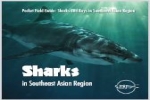
Press Release Convention on International Trade in Endangered Species of Wild Fauna and Flora (CITES) 27. April 2021 — — — — — — — The CITES Secretariat and the Secretariat of the Southeast Asian Fisheries Development Center (SEAFDEC) have jointly published two guides to facilitate the identification of shark and ray species common in
14.5 million-year-old shark-attack on manatee documents oldest predator-prey interaction
Published on 22 Apr, 2021 at 4:14 in Research | Viewed times | No Comments
Press Release Naturhistorisches Museum Wien 06. April 2021 — — — — — — — Researcher of the NHM Vienna identified a fossilized skeleton of a manatee. The bones bear rare fossil bite marks and teeth of a tiger shark were also found next to the skeleton. What do these fossils tell us about life
Older than expected: Teeth reveal the origin of the tiger shark
Press Release Universität Wien 24. March 2021 — — — — — — — — — With a total length of up to 5.5m, the tiger shark is one of the largest predatory sharks known today. This shark is a cosmopolitan species occurring in all oceans worldwide. It is characterized by a striped pattern on
Southern Africa’s Most Endangered Shark Just Extended its Range by 2,000 Kilometers
Press Release The Wildlife Conservation Society (WCS) 26. January 2021 —- —- —- —- — — — —- A team of marine scientists led by the Wildlife Conservation Society (WCS) has confirmed that southern Africa’s most threatened endemic shark – the Critically Endangered shorttail nurse shark (Pseudoginglymostoma brevicaudatum) – has been found to occur in
Study estimates 200-plus white sharks breed each year
Published on 21 Jan, 2021 at 10:12 in Research | Viewed times | No Comments
News Release The University of Queensland 23 December 2020 — — — — — — — — — — — A study on the vulnerable white shark has shown that approximately 206 to 252 sharks breed on Australia’s east coast each year. The joint study involving The University of Queensland, NSW Department of Primary Industries and Stellenbosch University in South Africa